
Medically Reviewed by Dermatological Advisory Board | Published for Evidence-Based Skincare
Clindamycin and Nicotinamide Gel: The Dual-Action Solution for Clear, Acne-Free Skin
Persistent acne is rarely just a cosmetic frustration; it is an active inflammatory skin condition that requires targeted clinical care. When standard cleansers and over-the-counter creams fail to clear recurring breakouts, dermatologists turn to proven combination therapies to control the root causes of acne.
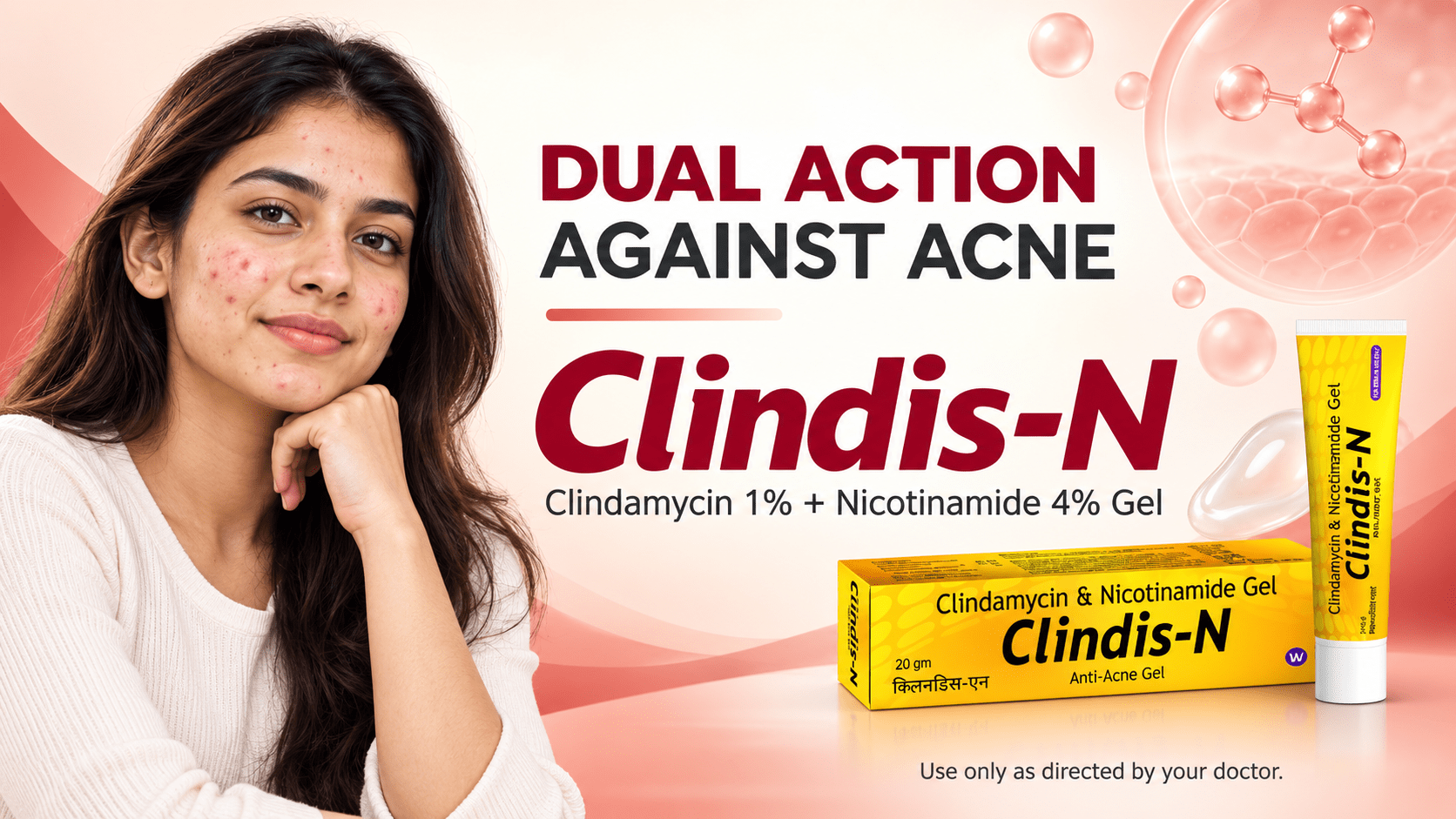
Among topical medical treatments, the combination of Clindamycin 1% and Nicotinamide 4% Gel—formulated in Bionova’s Clindis-N Gel—has become a cornerstone prescription for moderate acne vulgaris, painful cysts, and post-acne marks.
Here is everything you need to know about how this dual-action gel works, its clinical benefits, proper usage, and what to expect during your treatment journey.
What is Clindis-N Gel?
Clindis-N Gel is a targeted dermatological anti-acne gel that pairs a potent topical antibiotic with an active, barrier-supporting anti-inflammatory agent.
By combining these two distinct mechanisms into a single lightweight gel vehicle, Clindis-N addresses bacterial proliferation, redness, excess oil, and residual discoloration simultaneously.
How It Works: The Dual-Action Mechanism
Acne develops when hair follicles become plugged by dead skin cells and sebum, creating an anaerobic environment where Cutibacterium acnes (C. acnes) bacteria thrive, triggering deep inflammation. Clindis-N interrupts this cycle on two fronts:
1. Clindamycin Phosphate (1%): Targeted Antibacterial Action
- Bacterial Suppression: Clindamycin is a lincosamide antibiotic that binds reversibly to the 50S ribosomal subunit of susceptible bacteria. This halts bacterial protein synthesis, starving and stopping the growth of C. acnes.
- Halting Papules and Pustules: By reducing bacterial colonies within clogged pores, it stops microcomedones from erupting into inflamed, painful bumps.
2. Nicotinamide (4%): Calming Inflammation & Barrier Defense
- Redness & Swelling Relief: Nicotinamide (the bioactive form of Vitamin B3) suppresses inflammatory cytokines like IL-8, reducing swelling, heat, and tenderness in active lesions.
- Sebum Regulation: It directly regulates sebaceous gland activity, preventing the oily skin profile that feeds acne bacteria.
- Fading Post-Acne Erythema (PAE): Unlike harsh treatments that leave lingering dark or red marks, 4% Nicotinamide strengthens the skin barrier and accelerates cellular repair, noticeably reducing redness left behind after lesions heal.
Primary Indications: Who Should Use Clindis-N?
Dermatologists prescribe Clindis-N for multiple presentations of blemish-prone skin:
- Acne Vulgaris: Mild-to-moderate forms, including persistent whiteheads, blackheads, and red bumps.
- Inflammatory Lesions: Tender papules, pustules, and surface cysts that feel inflamed or sore to the touch.
- Post-Acne Erythema (PAE): Persistent red or purple spots lingering after an active breakout has cleared.
- Oily Skin Breakouts: Excess sebum production leading to repeated congestion along the T-zone, jawline, and cheeks.
Why the Clindamycin + Nicotinamide Combination Outperforms Monotherapy
Historically, topical clindamycin was used alone. However, modern dermatology recognizes two major challenges with single-antibiotic regimens: bacterial resistance and barrier irritation.
| Treatment Parameter | Clindamycin Monotherapy (Alone) | Clindamycin 1% + Nicotinamide 4% (Clindis-N) |
| Bacterial Clearance | High initial clearance; risk of resistance over time | High sustained clearance |
| Anti-Inflammatory Power | Moderate | Superior (Synergistic cytokine reduction) |
| Sebum / Oil Control | Minimal impact on oil glands | Significant sebum regulation |
| Post-Acne Redness | Does not target post-inflammatory redness | Actively reduces post-acne marks (PAE) |
| Skin Barrier Support | Can cause flaking or mild drying | Strengthens epidermal moisture barrier |
Nicotinamide minimizes the flaking and surface irritation frequently experienced with topical antibiotics, making Clindis-N exceptionally well-tolerated across oily, normal, and combination skin types.
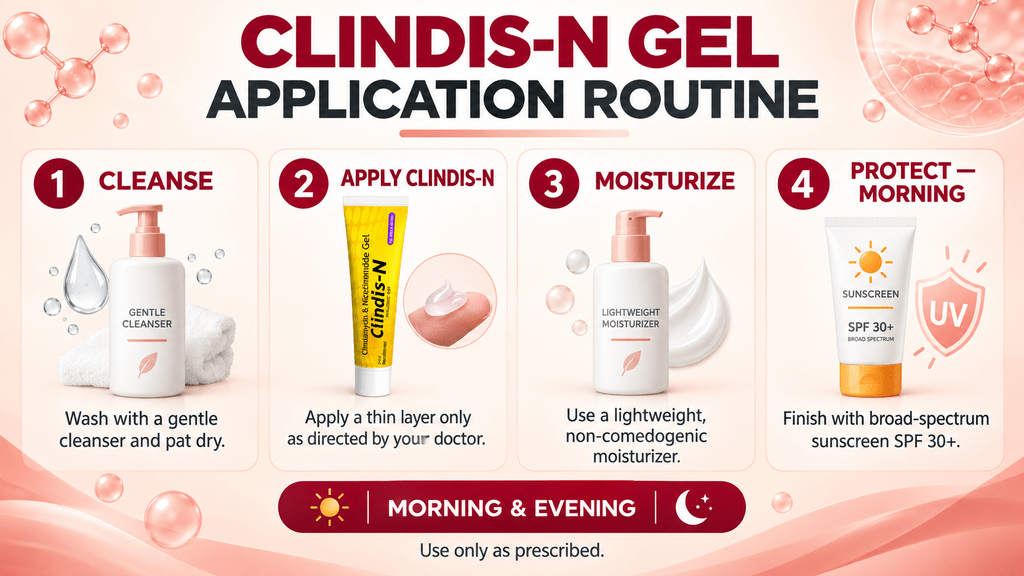
Step-by-Step Application: How to Use Clindis-N Gel
Cleanse Gently: Wash your face with a mild, soap-free foaming or gel cleanser. Avoid abrasive physical scrubs, which aggravate inflammatory lesions.
Pat Completely Dry: Wait 2 to 3 minutes until skin is dry. Applying active topicals to damp skin can increase unwanted systemic penetration and surface irritation.
Apply a Thin Layer: Squeeze a pea-sized amount of Clindis-N Gel onto your fingertip. Dot it across the entire affected area (forehead, cheeks, chin) rather than simply dabbing it as an isolated spot treatment. This treats visible breakouts while preventing emerging microcomedones.
Moisturize: Follow with an oil-free, non-comedogenic ceramide or hyaluronic acid moisturizer to seal hydration.
Daytime Sun Protection: Always apply a broad-spectrum SPF 30 or higher every morning. While Nicotinamide protects against oxidative stress, healing skin remains sensitive to UV-induced pigmentation.
What Results to Expect: Week-by-Week Timeline
Clinical acne treatments require consistent application. Here is the realistic recovery progression with regular daily use:
- Weeks 1–2 (Initial Calming): Nicotinamide begins reducing surface redness, tenderness, and oiliness. Active pustules start to flatten, and swelling diminishes.
- Weeks 3–6 (Bacterial Reduction): Bacterial counts drop significantly. New breakouts become noticeably smaller, less frequent, and resolve faster without progressing to severe inflammation.
- Weeks 8–12 (Clearance & Tone Restoration): Clearer texture emerges. Overall skin tone balances as stubborn post-acne erythema (red marks) fades, leaving the barrier resilient and restored.
Safety, Precautions, and Side Effects
Clindis-N Gel is well-tolerated by most skin types, but mindful usage guarantees optimal safety:
- Mild Tingling or Dryness: Mild stinging, warmth, or slight peeling can occur during the first few days as your skin adjusts. If dryness persists, apply your moisturizer first, wait 5 minutes, and apply the gel on top (the “sandwich” technique).
- Avoid Sensitive Zones: Keep the gel away from mucous membranes, eyes, lips, corners of the nose, and open wounds or cuts.
- Medical Supervision: Because Clindamycin is an antibiotic, use Clindis-N Gel strictly under the direction of a qualified dermatologist or physician to ensure appropriate course duration and preserve topical efficacy.
Frequently Asked Questions (FAQs)
Can I use Clindis-N Gel with Benzoyl Peroxide or Salicylic Acid?
Yes, but do not layer them at the exact same moment unless directed by your physician. You can use a gentle salicylic acid wash in the morning and apply Clindis-N Gel in the evening, or alternate days to prevent stripping your skin barrier.
Does Clindis-N Gel cause “skin purging”?
No. Unlike topical retinoids or chemical exfoliants (AHAs/BHAs) that accelerate cellular turnover and draw deep microcomedones rapidly to the surface, neither clindamycin nor nicotinamide causes true cell-turnover purging. Any immediate flaring is usually barrier irritation or natural breakout progression.
Can I wear makeup over Clindis-N Gel?
Yes. The lightweight gel formulation absorbs cleanly without leaving a greasy or chalky residue. Allow the gel to dry for 2–3 minutes before applying non-comedogenic moisturizer, sunscreen, and cosmetic makeup.
Disclaimer: Clindis-N Gel is a prescription dermatological formulation. This article is intended for educational purposes and should not replace individualized medical advice, clinical diagnosis, or medical treatment from a licensed healthcare provider.
Clinical Citations
Clinical trials evaluate the comparative efficacy and therapeutic profiles of topical clindamycin and nicotinamide formulations for acne vulgaris. Investigations demonstrate that topical 4% nicotinamide and 1% clindamycin gels reduce inflammatory acne lesions and Cook’s acne grades across multi-week interventions, with nicotinamide exhibiting marked effectiveness in oily skin profiles without promoting antibiotic resistance. Controlled trials also demonstrate the utility of clindamycin and nicotinamide-based emulsions in improving clinical outcomes and treatment compliance in acne management.
References
Khodaeiani, E., Fouladi, R. F., Amirnia, M., Saeidi, M., & Karimi, E. R. (2013). Topical 4% nicotinamide vs. 1% clindamycin in moderate inflammatory acne vulgaris. International Journal of Dermatology, 52(8), 999–1004. https://doi.org/10.1111/ijd.12002 Cited by: 132
Morganti, P., Berardesca, E., Guarneri, B., et al. (2011). Topical clindamycin 1% vs. linoleic acid-rich phosphatidylcholine and nicotinamide 4% in the treatment of acne: a multicentre-randomized trial. International Journal of Cosmetic Science, 33(5), 467–476. https://doi.org/10.1111/j.1468-2494.2011.00658.x Cited by: 51